Abolition of Sunday Meetings
Animal FarmHardly a day had passed since the dogs had driven Snowball from the farm when Napoleon, mounted on the raised platform where Old Major had once stood, announced the end of the Sunday-morning Meetings. The Meetings were unnecessary, he said, and wasted time. From now on, a special committee of pigs, presided over by himself, would settle all questions relating to the working of the farm, meeting in private and communicating their decisions to the others. The animals would still assemble on Sunday mornings to salute the flag, sing Beasts of England, and receive their orders for the week, but the debates that had defined the early revolutionary spirit were gone. This was the first open step in the dismantling of collective decision-making, replacing it with a bureaucracy that answered only to Napoleon.
The announcement left the animals dismayed. Several would have protested if they could have found the right arguments. Even Boxer was vaguely troubled; he set his ears back, shook his forelock, and tried to marshal his thoughts, but in the end he could not think of anything to say. Four young porkers in the front row uttered shrill squeals of disapproval and sprang to their feet, but the dogs sitting round Napoleon let out deep, menacing growls, and the pigs fell silent and sat down again. Then the sheep broke out into a tremendous bleating of "Four legs good, two legs bad!" which went on for nearly a quarter of an hour, effectively silencing any further discussion. The slogan that Snowball had devised to make the principles of Animalism accessible to the humbler animals was now used as a weapon to suppress dissent.
The abolition of the Meetings did not stand alone. Within days, the four young porkers who had dared to protest were seized by the dogs, forced to confess to conspiring with Snowball, and torn to pieces before the assembled animals. The cult of Napoleon grew rapidly: he was now always referred to as "our Leader, Comrade Napoleon," and the pigs invented for him titles such as Father of All Animals, Terror of Mankind, and Protector of the Sheep-fold. Squealer, with tears rolling down his cheeks, would speak of Napoleon's wisdom, the goodness of his heart, and the deep love he bore to all animals everywhere. Every successful achievement and every stroke of good fortune was credited to Napoleon's leadership; hens would remark to each other that under his guidance they had laid five eggs in six days, and cows would exclaim that the water tasted excellent thanks to his leadership. The weekly assembly, once a forum for debate, had become a ceremony of passive reception.
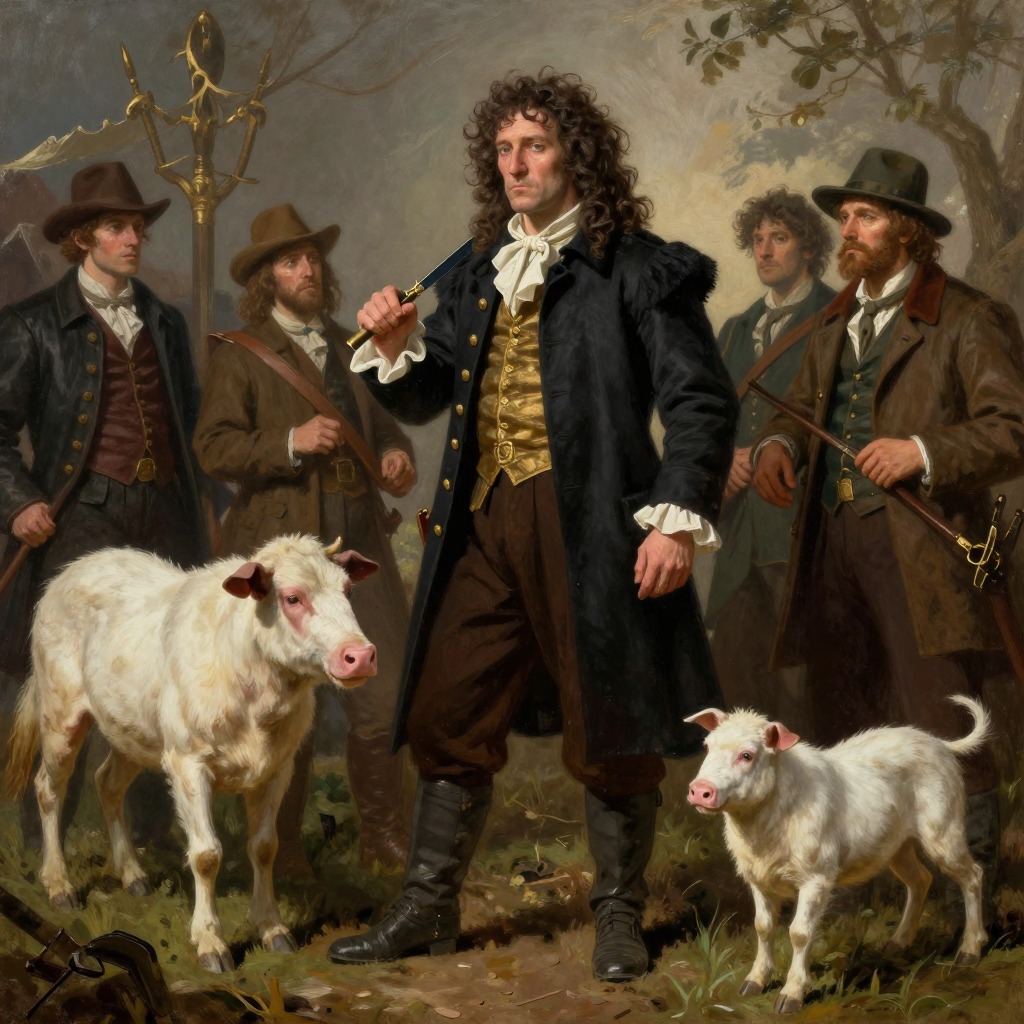
The trajectory that began with the abolition of the Sunday Meetings reached its logical conclusion years later, when the pigs began to walk on their hind legs, carry whips in their trotters, and wear Mr. Jones's clothes. Napoleon himself appeared in a black coat, ratcatcher breeches, and leather leggings, and his favourite sow wore the watered silk dress that Mrs. Jones had once worn on Sundays. The pigs set up a wireless, installed a telephone, and took out subscriptions to human newspapers. The distinction between pig and human grew so blurred that when the animals peered through the farmhouse window at a card game between Napoleon and Mr. Pilkington, they saw that the twelve voices shouting in anger were all alike, and it was impossible to say which was which. The original prohibitions that Old Major had laid down—no living in houses, no sleeping in beds, no wearing clothes, no drinking alcohol, no engaging in trade—had been systematically violated, and the revolution had come full circle to the very tyranny it had sought to overthrow.